How Is Excessive Sweating Treated?
11/06/2026
How Is Underarm Sweating Treated?
11/06/2026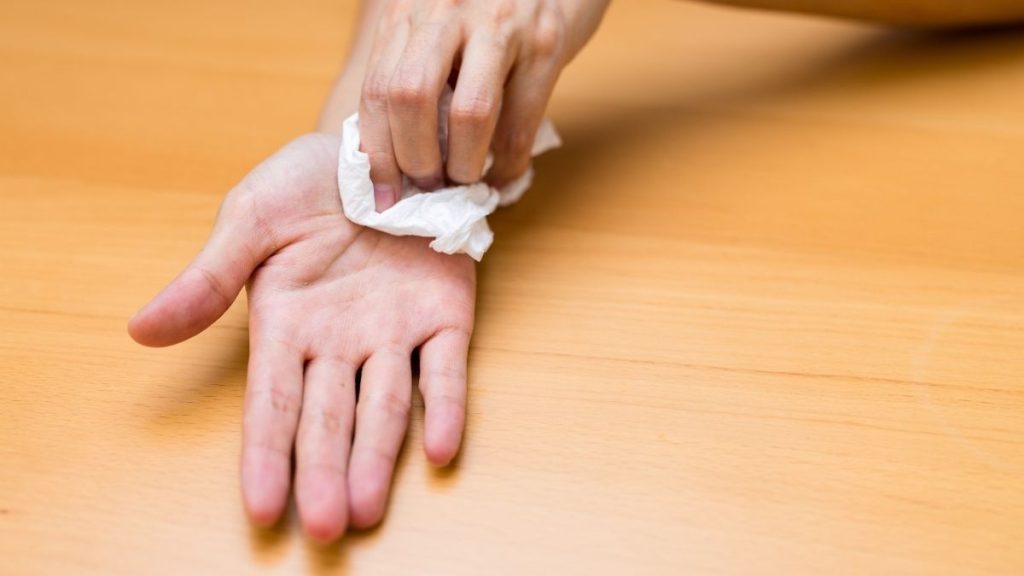
Hand sweating is one of the most uncomfortable sweating complaints in daily life. This is because the hands are constantly used in social communication, work, school, and everyday activities. Shaking hands, holding a pen, using a phone, typing on a computer keyboard, or signing a document can become difficult for people with hand sweating.
Everyone’s hands may sweat from time to time. Sweating in the palms during hot weather, excitement, stress, exercise, or fear is normal. However, if the hands frequently become wet without an obvious reason, even in a cool environment, and this affects daily life, it should be evaluated as hand sweating, also known as palmar hyperhidrosis.
Hand sweating is often related to the sweat glands working more than normal. In primary hyperhidrosis, there may be no clear underlying disease. Instead, the nerve signals that stimulate the sweat glands may be overactive. Primary hyperhidrosis can commonly affect the palms, soles of the feet, underarms, and sometimes the face. In some people, there may also be a family tendency.
What Is Hand Sweating?
Hand sweating is the production of more sweat than normal in the palms. Medically, it is called palmar hyperhidrosis. This condition may appear as mild moisture, but in some people, sweating may be intense enough to drip from the hands.
Sweaty palms are not only a physical discomfort. They can affect a person’s social behavior, self-confidence, professional performance, and daily comfort. For this reason, many people with hand sweating avoid handshakes, wipe their hands frequently, carry tissues, or feel the need to hide their hands in social situations.
Hand sweating may become more noticeable especially:
-
- during excitement
- during stress
- during exams, presentations, or job interviews
- in social environments
- in hot weather
- during physical activity
- sometimes without any obvious reason
The important point is this: If hand sweating happens only with stress, it does not always mean disease. However, if the hands remain constantly wet even when the person is calm, or if this affects daily life, a more detailed evaluation is needed.
Is Hand Sweating Normal?
In some situations, hand sweating is completely normal. The body can produce sweat to maintain temperature balance and respond to emotional triggers. For example, sweating in the palms before an exciting speech, during fear, or under intense stress may be a natural body response.
However, hand sweating may be outside the normal range in the following situations:
-
- if the hands frequently become wet for no clear reason
- if the palms sweat even in a cool environment
- if sweating is intense in both hands
- if shaking hands, writing, or using a phone becomes difficult
- if the person starts avoiding social situations because of sweating
- if sweating has continued since childhood or adolescence
- if there is a constant need to wipe the hands during daily life
Excessive sweating can occur even when the body does not need cooling, and sometimes it may develop without an obvious cause. This condition is evaluated as hyperhidrosis.
What Is the Most Common Cause of Hand Sweating?
One of the most common causes of hand sweating is primary focal hyperhidrosis. In primary focal hyperhidrosis, sweating is usually concentrated in specific areas. The palms, soles, underarms, and face are among the most commonly affected areas.
In primary hand sweating, there is usually no serious underlying disease. The problem is more commonly related to the nervous system stimulating the sweat glands more than necessary. In these people, the number of sweat glands may be normal, but the glands receive more stimulation than usual.
For this reason, people with hand sweating often say things like:
-
- “My hands sweat for no reason.”
- “It is not hot, but my palms are wet.”
- “It gets worse when I get excited.”
- “I have had this since childhood.”
- “Someone in my family has a similar problem.”
- “I have to wipe my hands before shaking hands.”
This pattern may be compatible with primary palmar hyperhidrosis. However, for proper evaluation, the type of sweating, its duration, the age of onset, and accompanying symptoms should be considered together.
Is Hand Sweating Related to the Nervous System?
Yes. Hand sweating is largely related to the nervous system. Sweat glands are controlled by the automatic nervous system in the body. This system works outside the person’s conscious control. In other words, even if a person says, “I do not want my hands to sweat,” sweating may occur when the nervous system sends signals to the sweat glands.
In primary hyperhidrosis, the signals that stimulate the sweat glands are thought to be overactive. For this reason, a person may experience intense sweating in the palms even without being in a hot environment.
This is not a problem that the person can control by willpower. Advice such as “do not get excited,” “do not stress,” or “stop thinking about it” is usually not enough for people with hand sweating. In true hyperhidrosis, the problem is not only psychological; it is related to the overactivity of the communication between the nerves and sweat glands.
Do Stress and Excitement Increase Hand Sweating?
Yes. Stress, excitement, embarrassment, fear, exams, meetings, or social pressure can increase hand sweating. However, this does not mean that hand sweating is only psychological.
In many people, the main problem is already a tendency toward sweaty palms. Stress and excitement make this tendency more visible. For example, a person with mild hand sweating may experience much more obvious sweating during a job interview, presentation, exam, or public speaking.
This may create a common cycle in people with hand sweating:
The person thinks their hands will sweat.
This thought increases anxiety.
Anxiety increases sweating.
As sweating increases, the person feels more uncomfortable.
This may lead to social avoidance.
This cycle can increase the effect of hand sweating on daily life. However, if the main problem is hyperhidrosis, stress management alone may not provide complete control. In this case, medical evaluation and appropriate treatment options may be considered.
Can Hand Sweating Be Genetic?
Yes. In some people, hand sweating may show a family tendency. Genetic predisposition may be considered especially when hand sweating begins in childhood or adolescence, affects both hands, and continues for many years.
Having a mother, father, sibling, or close relative with similar hand, foot, or underarm sweating may support this possibility.
However, not having hand sweating in the family does not mean that a person cannot have hyperhidrosis. Some patients have no family history. Therefore, evaluation should not be based only on genetics, but also on the characteristics of the complaint.
At What Age Does Hand Sweating Start?
Primary hand sweating usually becomes noticeable during childhood, adolescence, or young adulthood. Some people remember that their hands have been sweating since primary school. Others become more aware of the complaint during adolescence, when social relationships and school life become more important.
Hand sweating may become more noticeable during:
-
- wetting notebooks or papers at school
- difficulty holding a pen during exams
- embarrassment in social environments during adolescence
- handshake problems in university or work life
- difficulty using computers, phones, or equipment
- discomfort in jobs where hand contact is important
Hand sweating that starts later in life should be evaluated more carefully. Especially if sweating begins suddenly in adulthood in a person who did not have this complaint before, underlying causes should be investigated.
Why Is Newly Developed Hand Sweating Important?
If hand sweating has been present since childhood or adolescence and usually affects both hands, primary hyperhidrosis is more likely. However, if hand sweating starts later in life, especially together with generalized body sweating or night sweating, different causes should be considered.
Newly developed sweating may be related to:
-
- thyroid diseases
- hormonal changes
- infections
- certain medications
- low blood sugar
- menopause
- some neurological conditions
- metabolic diseases
- anxiety disorders
- some systemic diseases
Excessive sweating can sometimes develop because of another underlying disease or medication use. This is called secondary hyperhidrosis.
For this reason, the information that sweating “started later” is important. Treatment may need to focus not only on drying the hands, but also on identifying the underlying cause.
Can Hand Sweating Be Related to Thyroid or Hormones?
In some people, excessive sweating may be related to hormonal or metabolic causes. An overactive thyroid gland, menopause, blood sugar fluctuations, or some hormonal changes may increase sweating.
However, in these conditions, sweating usually does not remain limited only to the hands. Generalized sweating, palpitations, weight changes, hot flashes, trembling, fatigue, or sleep problems may also accompany the complaint.
For this reason, if hand sweating has been present since childhood, affects both hands, and is limited mainly to the palms, primary hyperhidrosis may be more likely. But if sweating started later or is accompanied by other symptoms, a general health evaluation is important.
Is Hand Sweating Psychological?
Hand sweating may increase due to psychological factors, but this does not mean that every case of hand sweating is psychological. This distinction is very important.
Many people with hand sweating notice that they sweat more in stressful situations. This is natural because stress and excitement activate the sympathetic nervous system. However, in primary palmar hyperhidrosis, the main problem is not simply that the person is anxious. The system that stimulates the sweat glands works more actively than normal.
That is why telling someone with hand sweating to “relax and it will go away” is usually not enough. The person often becomes anxious because they cannot control the condition. As hand sweating affects social life, anxiety may also increase. Therefore, psychological effects and physical sweating can reinforce each other.
The correct approach is not to underestimate hand sweating and to consider its effect on quality of life.
When Can Hand Sweating Be a Sign of Hyperhidrosis?
Hand sweating should be evaluated for hyperhidrosis if it has the following features:
-
- if it has continued for more than 6 months
- if it usually affects both hands
- if it is too intense to be explained by temperature
- if it occurs several times a week or more often
- if it clearly decreases or disappears during sleep
- if it affects daily life and social relationships
- if it started during childhood or adolescence
- if there is a family history of similar sweating
These features may suggest primary palmar hyperhidrosis. However, specialist evaluation is needed for a clear assessment. In some patients, hand sweating occurs alone. In others, foot, underarm, or facial sweating may also accompany the condition.
How Does Hand Sweating Affect Daily Life?
Hand sweating may seem like a simple problem from the outside. However, for the person experiencing it, it can be quite challenging. This is because the hands are used constantly in social and professional life.
People with hand sweating may commonly experience:
-
- avoiding handshakes
- wetting paper while writing
- difficulty holding a pen
- a wet phone screen
- discomfort while using a keyboard or mouse
- a slippery feeling while holding a steering wheel
- hiding the hands in social settings
- loss of confidence during job interviews
- hesitation in situations requiring close contact
- needing to carry tissues or napkins constantly
If these effects are present, hand sweating is not just “sweating too much.” It may have become a health problem that directly affects quality of life.
Can Hand Sweating Occur Together with Sweating in Other Areas?
Yes. Hand sweating may sometimes occur alone, but it may also occur together with foot sweating, underarm sweating, or facial sweating. In primary hyperhidrosis, palm and sole sweating may be seen together.
Common combinations include:
Hand and foot sweating
Sweating of the palms may be accompanied by sweating of the soles. These people may experience both wet hands and discomfort inside shoes, odor, or a slippery feeling.
Hand and underarm sweating
In some people, hand sweating may occur together with intense underarm sweating. This can affect both social contact and clothing choices.
Hand sweating and facial blushing
In some patients, hand sweating may be accompanied by facial blushing or facial sweating. Especially in social situations, both sweaty hands and facial redness may increase the person’s anxiety.
For this reason, evaluation should not focus only on the hands. The distribution of sweating throughout the body should also be considered.
When Should Hand Sweating Be Taken Seriously?
Hand sweating should be taken seriously when it begins to affect daily life. Evaluation should not be delayed, especially if it affects social relationships, education, work, or self-confidence.
It is important to seek medical advice in the following situations:
-
- if the person avoids handshakes because of sweating
- if the hands remain constantly wet
- if writing, using a phone, or using a computer becomes difficult
- if there is significant discomfort in social environments
- if sweating started later in life
- if night sweating is present
- if palpitations, weight loss, fever, or fatigue accompany sweating
- if sweating is gradually increasing
- if the person is psychologically affected by the condition
These signs may show that hand sweating is not only a daily discomfort, but a condition that should be evaluated.
Which Doctor Should You See for Hand Sweating?
The first evaluation for hand sweating may vary depending on the type of sweating and accompanying symptoms. Dermatology, internal medicine, endocrinology, and thoracic surgery may all be involved in the process.
If sweating started later in life, if there is generalized body sweating, or if other systemic symptoms are present, underlying causes should first be investigated. However, if hand sweating has continued since childhood or adolescence, is concentrated in the palms, and affects daily life, evaluation for hyperhidrosis may be needed.
Thoracic surgery evaluation becomes important in patients who are considering surgical treatment options. Especially when ETS or similar surgical options are considered for hand sweating, the patient’s suitability, expectations, and possible risks should be discussed in detail.
Can Hand Sweating Go Away on Its Own?
Whether hand sweating can go away on its own depends on the cause. Hand sweating related to hot weather, stress, excitement, or a temporary condition may decrease over time. However, primary palmar hyperhidrosis may continue for a long time and often does not completely disappear on its own.
Some people may say that their complaint becomes milder with age. However, in others, the effect of hand sweating becomes more obvious as school, work, and social life progress. This is because situations where the hands need to be used become more frequent.
For this reason, if hand sweating affects quality of life, the “wait and see” approach may not always be correct. With proper evaluation, the cause of sweating and treatment options can be determined.
Can Hand Sweating Be Treated?
Yes. Hand sweating can be controlled in many patients. The treatment option is determined according to the severity of sweating and its impact on daily life.
Treatment options that may be considered for hand sweating include:
-
- lifestyle adjustments
- antiperspirant products
- iontophoresis
- botulinum toxin applications
- some oral medications
- surgical treatment options in suitable patients
However, not every treatment is suitable for every patient. For example, surgery may not be considered in mild hand sweating. In very severe and long-standing hand sweating, more permanent options may be considered. Therefore, treatment should be planned individually.
Conclusion
Hand sweating is often caused by excessive stimulation of the sweat glands in the palms. Hot weather, stress, and excitement may increase hand sweating. However, constant and intense hand sweating may not be explained only by psychological causes.
Hand sweating that has continued since childhood or adolescence, affects both hands, and interferes with social life and daily activities should be evaluated as palmar hyperhidrosis. If sweating starts later in life or occurs with other symptoms, different underlying causes may need to be investigated.
In short, the important issue in hand sweating is not only that the hands sweat. When it started, in which situations it increases, how much it affects daily life, and whether other symptoms accompany it should all be evaluated together. With proper assessment, suitable treatment options for hand sweating can be determined.
Frequently Asked Questions
1. What causes hand sweating?
Hand sweating is most commonly related to overactivity of the nervous system that stimulates the sweat glands in the palms. Hot weather, stress, and excitement may increase sweating. In some people, a localized excessive sweating condition called primary palmar hyperhidrosis is present.
2. Is sweaty palms normal?
Sweaty palms from time to time are normal. However, if the hands sweat frequently without an obvious reason and enough to affect daily life, they should be evaluated for hyperhidrosis.
3. Is hand sweating psychological?
Hand sweating may increase with stress and excitement, but it is not always psychological. In primary hand sweating, the nervous system that stimulates the sweat glands works more actively than normal. For this reason, the person may not be able to control sweating completely.
4. Is hand sweating genetic?
In some people, hand sweating may show a family tendency. Similar complaints may be seen in family members with hand, foot, or underarm sweating. However, hand sweating may also occur in people without a family history.
5. What causes hand sweating in children?
Hand sweating in children may be related to primary hyperhidrosis. Evaluation is needed especially if it affects both hands, continues for a long time, and interferes with daily activities such as writing.
6. Which diseases can hand sweating be a symptom of?
Newly developed hand sweating may be related to hormonal, metabolic, or systemic conditions. Thyroid diseases, low blood sugar, infections, certain medications, or neurological conditions may increase sweating.
7. When should I see a doctor for hand sweating?
A doctor should be consulted if hand sweating affects daily life, makes activities such as shaking hands or writing difficult, starts later in life, or occurs together with other symptoms.
8. Can hand sweating go away on its own?
Hand sweating related to temporary stress or heat may decrease. However, primary palmar hyperhidrosis often continues for a long time and may not completely disappear on its own.
9. Which doctor should I see for hand sweating?
Dermatology, internal medicine, endocrinology, and thoracic surgery may be involved in the evaluation of hand sweating. Thoracic surgery evaluation is important in patients considering surgical treatment options.
10. Can hand sweating be treated?
Yes. Hand sweating can be controlled in many patients. Antiperspirants, iontophoresis, botulinum toxin applications, medications, and surgical options may be considered in suitable patients.