What Causes Foot Sweating and How Can It Be Reduced?
25/06/2026
How Is Facial Sweating Treatment Planned?
25/06/2026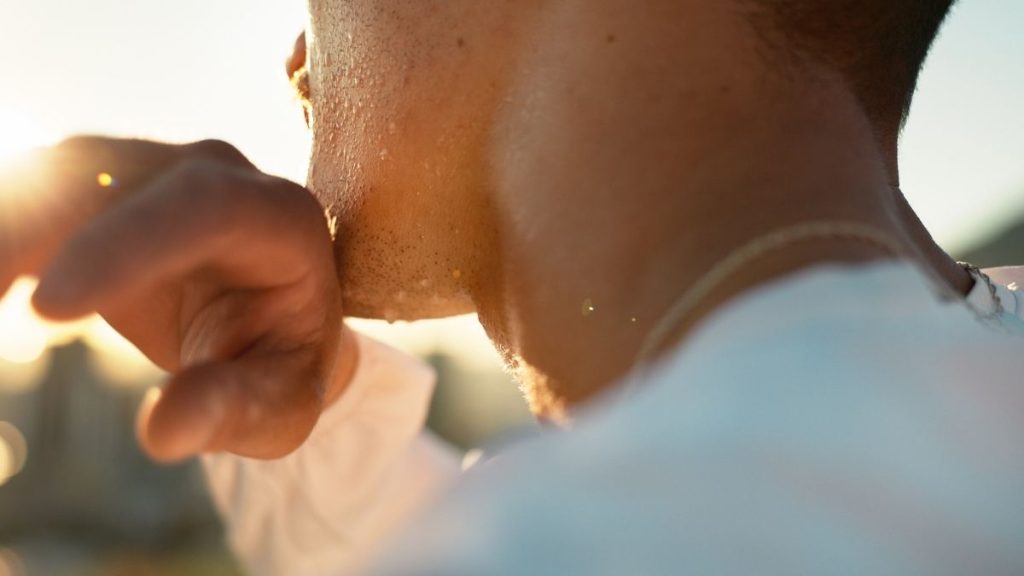
Facial sweating is one of the sweating complaints that becomes noticeable most quickly in social life. This is because the face is an area that is difficult to hide. When sweating is noticeable on the forehead, around the nose, upper lip, cheeks, scalp, or neck, the person may feel uncomfortable, need to wipe their face constantly, or think that other people are noticing it.
Facial sweating does not always mean disease. Hot weather, exercise, stress, excitement, embarrassment, spicy foods, hot drinks, or intense physical activity may increase sweating in the face area. However, if facial sweating occurs without an obvious reason, continues even in a cool environment, affects social life, or occurs together with facial blushing, it may need to be evaluated as craniofacial hyperhidrosis, meaning excessive sweating of the head and face.
Hyperhidrosis is a condition of excessive sweating that is not always related to heat or exercise. In some people, it may cause social anxiety, embarrassment, and significant difficulty in daily life.
What Is Facial Sweating?
Facial sweating is increased sweat production on the forehead, nose, cheeks, upper lip, chin, scalp, or neck area. In some people, only the forehead sweats. In others, the entire face and scalp may be affected.
Facial sweating is especially noticeable because the person cannot cover this area with clothing. Underarm or foot sweating may often go unnoticed by others. However, facial sweating becomes more visible in social environments.
People with facial sweating may commonly experience:
-
- Constant need to wipe the face
- Sweat dripping from the forehead or around the nose
- Noticeable sweating on the upper lip
- Wetness in the scalp
- Discomfort in social settings
- Increased sweating during meetings, presentations, or conversations
- Makeup being affected
- Discomfort when using glasses or masks
- Sweating together with facial blushing
If this situation happens frequently and affects quality of life, it should not be considered only “normal sweating.”
Is Facial Sweating Normal?
Facial sweating is normal in some situations. When body temperature rises, during exercise, or in a hot environment, sweating may occur in the face area. The face and head are among the areas involved in helping the body maintain temperature balance.
Normal facial sweating usually increases in situations such as:
-
- Hot weather
- Exercise
- Crowded and poorly ventilated environments
- Spicy foods
- Hot drinks
- Stress and excitement
- Embarrassment or social pressure
- Fever-related illnesses
In these situations, sweating is usually linked to a clear trigger. When the trigger disappears, sweating decreases.
However, if facial sweating is noticeable even in a cool environment, causes the person to wipe their face constantly, affects social relationships, or occurs without an obvious reason, it should be evaluated for hyperhidrosis.
What Is Excessive Facial Sweating?
Excessive facial sweating means sweating more than normal in the face and head area. Medically, it may be called craniofacial hyperhidrosis. In this condition, sweating may become especially noticeable on the forehead, scalp, face, around the nose, upper lip, and neck.
Craniofacial hyperhidrosis may be considered a form of focal hyperhidrosis. In other words, sweating does not affect the whole body but is concentrated in a specific area.
People with excessive facial sweating often say:
“My face sweats for no reason.”
“When I get excited, sweat runs down my face.”
“Even when it is not hot, my forehead sweats.”
“I keep wiping my face during meetings or social situations.”
“I also experience facial blushing along with sweating.”
This condition can seriously affect social comfort and self-confidence.
What Causes Facial Sweating?
There may be many causes of facial sweating. Some causes are completely normal and temporary. In other cases, sweating may be related to hyperhidrosis or another health condition.
Main causes that may increase facial sweating include:
-
- Hot weather
- Exercise
- Stress and excitement
- Embarrassment or social pressure
- Spicy foods
- Hot drinks
- Fever and infections
- Hormonal changes
- Thyroid disorders
- Blood sugar fluctuations
- Menopause
- Certain medications
- Anxiety disorders
- Primary hyperhidrosis
- Sympathetic nervous system activation together with facial blushing
If facial sweating has been present since childhood or adolescence, increases in certain social situations, and there are no other serious disease symptoms, primary hyperhidrosis may be considered. However, if sweating started later in life, occurs at night, or is accompanied by symptoms such as weight loss, fever, or palpitations, underlying causes should be investigated.
If there is an underlying cause, treatment should focus on that cause first. If no clear cause is found, treatment may focus on controlling excessive sweating.
Do Stress and Excitement Increase Facial Sweating?
Yes. Stress, excitement, embarrassment, social pressure, and anxiety can noticeably increase facial sweating. Facial sweating may become more obvious especially during public speaking, job interviews, meetings, exams, introductions, or crowded social environments.
However, this does not mean that facial sweating is only psychological. In some people, the nervous system that stimulates the sweat glands may be more sensitive. In these people, stress and excitement make an already existing tendency to sweat more visible.
A common cycle in people with facial sweating is:
The person thinks their face will sweat.
This thought increases anxiety.
Anxiety increases sweating.
As sweating increases, the person feels more embarrassed.
This may lead to avoidance of social situations.
Over time, this cycle may affect self-confidence and social life. Therefore, facial sweating should not be dismissed simply by saying “do not get excited.”
Can Facial Sweating and Facial Blushing Occur Together?
Yes. In some people, facial sweating and facial blushing may occur together. Especially in social environments, during excitement, or in moments of embarrassment, facial redness and sweating may appear at the same time.
Facial blushing and facial sweating are not the same thing. Facial blushing occurs when the blood vessels in the face widen. Facial sweating occurs when the sweat glands become active. However, both may be related to activation of the sympathetic nervous system.
For this reason, some patients may describe both “my face turns red” and “my face sweats.” When these two conditions occur together, social discomfort may become more noticeable. While speaking, standing in a crowd, or being the center of attention, the person may feel both redness and sweating.
This situation should be evaluated separately. The treatment plan may change depending on whether facial blushing accompanies sweating.
Can Spicy Foods and Hot Drinks Cause Facial Sweating?
Yes. In some people, spicy foods, hot drinks, or very hot meals can increase facial sweating. This may become especially noticeable on the forehead, around the nose, upper lip, and scalp.
Sweating related to eating may be a normal response in some people. However, if sweating is very intense, makes eating in social environments difficult, or becomes excessive only with certain foods, it should be evaluated more carefully.
Foods and drinks that may increase facial sweating include:
-
- Hot and spicy foods
- Very hot soups
- Hot tea and coffee
- Caffeinated drinks
- Alcohol
- Meals served very hot
These triggers may vary from person to person. For this reason, it may be helpful for a person with facial sweating to observe which foods or drinks increase sweating.
Can Facial Sweating Be Related to Thyroid or Hormones?
Yes. In some people, facial sweating may be related to hormonal or metabolic causes. An overactive thyroid gland, menopause, blood sugar fluctuations, or some hormonal changes may increase sweating.
However, in these conditions, sweating is usually not limited only to the face. Generalized sweating, palpitations, weight changes, hot flashes, trembling, fatigue, sleep problems, or irritability may also be present.
For this reason, if facial sweating started later in life or occurs with other systemic symptoms, it should not be considered only a local sweating problem. Underlying causes may need to be evaluated.
Can Medications Cause Facial Sweating?
Yes. Some medications may increase sweating. This sweating may sometimes be felt more strongly in the face area, while in other cases it may affect the whole body.
Some pain medications, antidepressants, hormone treatments, diabetes medications, or medications that affect the nervous system may increase sweating. However, a person should not decide on their own whether a medication is causing sweating.
If facial sweating started after a new medication, increased after a dose change, or began to affect daily life, the person should speak with a doctor. Medications should not be stopped without medical advice.
What Does Newly Developed Facial Sweating Mean?
If facial sweating has been present since childhood or adolescence and increases in certain situations, primary hyperhidrosis may be more likely. However, if facial sweating starts later in life, it should be evaluated more carefully.
Newly developed facial sweating may be related to:
-
- Thyroid disorders
- Menopause or hormonal changes
- Infections
- Fever-related illnesses
- Certain medications
- Blood sugar fluctuations
- Anxiety disorders
- Some neurological conditions
- Systemic diseases
- Increased alcohol or caffeine intake
Especially if night sweating, weight loss, fever, fatigue, palpitations, or sudden generalized sweating is present, underlying causes should be investigated. In this situation, treatment should not focus only on reducing facial sweating, but also on identifying the condition causing the sweating.
Is Night Sweating on the Face Important?
Night sweating is important especially if it happens frequently and is intense enough to wet clothing or the pillow. Sweating of the face and head at night may sometimes be related to simple causes such as room temperature, a thick blanket, stress, or infection. However, if it becomes persistent, it should be evaluated.
Night sweating should be taken more seriously if it occurs with:
-
- Fever
- Weight loss
- Fatigue
- Palpitations
- Long-lasting cough
- Loss of appetite
- Generalized body sweating
- Newly developed sweating complaint
In such cases, medical evaluation is important to understand whether sweating is related to another condition.
Is Facial Sweating Psychological?
Facial sweating may increase with stress and anxiety. However, not every case of facial sweating is psychological. This distinction is important.
In some people, facial sweating becomes more noticeable in social situations. This may cause the thought, “Everyone will notice.” That thought increases anxiety, and anxiety may increase sweating. As a result, the person may start avoiding social situations.
However, in primary craniofacial hyperhidrosis, the main problem may not be only psychological. Overactivity of the nerve mechanisms that stimulate the sweat glands may also play a role. Therefore, telling someone with facial sweating to “just relax” is usually not enough.
The correct approach is to evaluate both the physical sweating and the social and emotional effects caused by it.
How Does Facial Sweating Affect Daily Life?
Facial sweating may affect social life more than some other types of sweating because it is more visible. As the person notices that their face is sweating, discomfort may increase, and this may lead to social hesitation.
People with facial sweating may experience:
-
- Needing to wipe the face during meetings or presentations
- Worrying about drawing attention in social situations
- Loss of confidence during job interviews
- Makeup being affected
- Discomfort when wearing glasses
- Increased sweating under a mask
- Avoiding hot environments
- Avoiding spicy foods
- Feeling uneasy in crowded places
- Embarrassment when facial blushing is also present
If these effects are present, facial sweating should be considered not only a physical complaint but also a condition that affects quality of life.
When Should Facial Sweating Be Taken Seriously?
Facial sweating should be taken seriously if it affects daily life, occurs without an obvious reason, or appears with other symptoms.
Evaluation is important in the following situations:
-
- Facial sweating occurs even in a cool environment
- The person has to wipe their face constantly
- Sweating affects social life
- It occurs together with facial blushing
- Sweating started later in life
- Night sweating is present
- Weight loss, fever, palpitations, or fatigue accompany sweating
- Sweating is gradually increasing
- It started after medication use
- Hand, foot, or underarm sweating is also present
These signs may show that facial sweating needs a more detailed evaluation.
Which Doctor Should You See for Facial Sweating?
The first evaluation for facial sweating may involve different specialties depending on the characteristics of sweating. Dermatology, internal medicine, endocrinology, and, when necessary, thoracic surgery may play a role in this process.
If facial sweating started later in life, occurs at night, or is accompanied by other systemic symptoms, underlying causes should first be investigated. Hormonal, metabolic, or medication-related causes may be evaluated at this stage.
If facial sweating has been present for a long time, clearly affects social life, occurs with facial blushing, and requires evaluation for hyperhidrosis, a more comprehensive approach may be planned. If surgical options are being considered, thoracic surgery evaluation may become important.
Can Facial Sweating Be Treated?
Yes. Facial sweating can be controlled in many patients. However, treatment should be planned according to the cause and severity of sweating.
Methods that may be considered for facial sweating include:
-
- Identifying triggers
- Lifestyle adjustments
- Suitable topical products
- Certain medications
- Botulinum toxin applications in selected patients
- Evaluation for facial blushing if present
- Surgical options in very selected cases
However, the face is a sensitive area, so treatment decisions should be made carefully. Not every method is suitable for every patient.
Conclusion
Facial sweating may occur due to normal triggers such as hot weather, exercise, stress, excitement, spicy foods, or hot drinks. However, if sweating occurs even in a cool environment, affects social life, appears together with facial blushing, or develops without an obvious reason, it should be evaluated as possible craniofacial hyperhidrosis.
The important issue in facial sweating is not only the amount of sweat. When it started, in which situations it increases, whether it occurs at night, whether other symptoms are present, and how much it affects quality of life should all be evaluated together.
With proper evaluation, the cause of facial sweating can be understood, and suitable treatment options can be planned. Therefore, facial sweating should not be ignored if it clearly affects social life.
Frequently Asked Questions
1. What causes facial sweating?
Facial sweating may occur due to hot weather, exercise, stress, excitement, embarrassment, spicy foods, hot drinks, hormonal changes, certain medications, or hyperhidrosis. If sweating starts later in life, underlying causes should be investigated.
2. Is excessive facial sweating normal?
Facial sweating during hot weather or exercise may be normal. However, if the face sweats even in a cool environment, if the person has to wipe the face constantly, and if social life is affected, evaluation for hyperhidrosis is needed.
3. Is facial sweating psychological?
Facial sweating may increase with stress and anxiety, but it is not always psychological. In some people, the nervous system that stimulates the sweat glands may work more actively. Therefore, facial sweating may not be explained only by excitement.
4. Are facial sweating and facial blushing the same?
No. Facial sweating occurs when the sweat glands work, while facial blushing occurs when blood vessels widen. However, both conditions may occur together in social situations and may increase each other’s impact.
5. Can spicy foods cause facial sweating?
Yes. Spicy foods, hot drinks, hot meals, and caffeine may increase facial sweating in some people. This effect may vary from person to person.
6. Can facial sweating be a sign of thyroid disease?
In some cases, excessive sweating may be related to thyroid disorders or hormonal changes. Evaluation is needed especially if palpitations, weight changes, trembling, hot flashes, or fatigue are also present.
7. Is night sweating on the face important?
Night sweating of the face or head should be evaluated if it happens frequently, is intense enough to wet clothing or the pillow, or occurs with symptoms such as fever, weight loss, or fatigue.
8. Can facial sweating go away on its own?
Facial sweating related to temporary stress, heat, or foods may decrease. However, if craniofacial hyperhidrosis is present, the complaint may continue for a long time and treatment may be needed.
9. Which doctor should I see for facial sweating?
Dermatology, internal medicine, endocrinology, and, when necessary, thoracic surgery may be involved in facial sweating evaluation. If sweating starts later in life or occurs with other symptoms, underlying causes should be investigated.
10. Can facial sweating be treated?
Yes. Facial sweating can be controlled in many patients. Treatment may include trigger management, topical products, medications, botulinum toxin applications, or advanced options in selected patients.