What Causes Facial Sweating?
25/06/2026
Is There a Relationship Between Sweating and Facial Blushing?
14/07/2026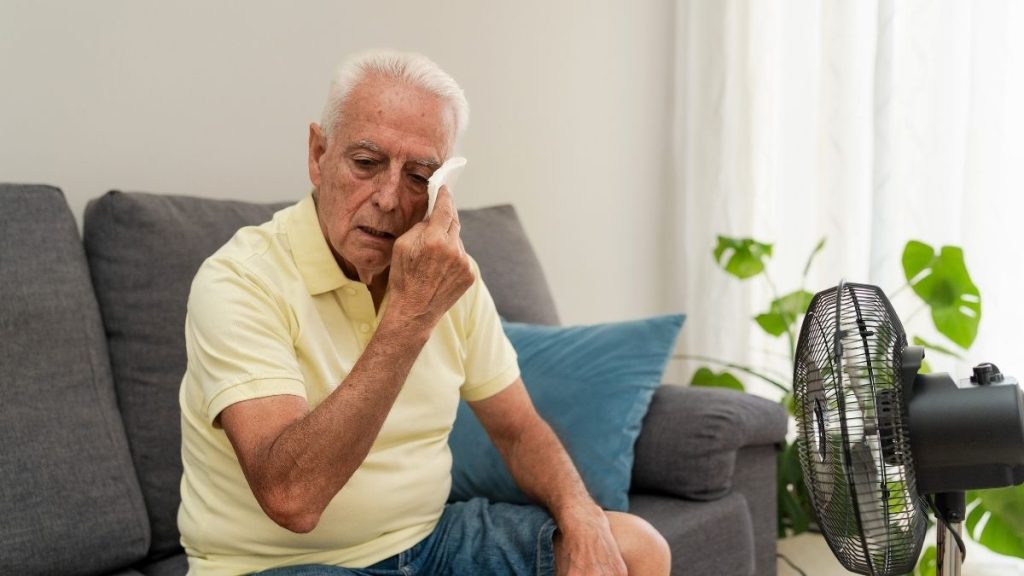
Facial sweating can directly affect a person’s daily life and social relationships. When sweating is noticeable on the forehead, around the nose, upper lip, cheeks, scalp, or neck, the person may feel constantly visible and uncomfortable. For this reason, facial sweating can become not only a physical complaint but also a problem that affects social comfort and self-confidence.
Facial sweating treatment is not planned in the same way for every patient. The cause of sweating, its severity, how long it has been present, whether it occurs together with facial blushing, whether night sweating is present, and how much daily life is affected all influence treatment selection.
In some patients, identifying and reducing triggers may be enough. In others, medications or selected local treatments may be considered. In cases of very noticeable, long-standing facial sweating that seriously affects social life, more advanced treatment options may be discussed. In general, hyperhidrosis treatment may include antiperspirants, medications, iontophoresis, botulinum toxin injections, and some surgical options; however, treatment choice depends on the location and cause of sweating.
How Is the Treatment for Facial Sweating Decided?
Before deciding on facial sweating treatment, it is important to understand whether the sweating is related to primary hyperhidrosis or caused by another condition. Facial sweating may sometimes be a normal response to hot weather, stress, excitement, spicy foods, or hot drinks.
However, in some people, facial sweating occurs even without a clear trigger. Sweating of the face even in a cool environment, needing to wipe the face constantly, discomfort during meetings or social situations, and facial blushing accompanying the sweating require a more detailed evaluation.
When deciding on treatment, the following points are considered:
-
- How long has facial sweating been present?
- Which area of the face is most affected?
- Is the forehead, upper lip, scalp, or entire face affected?
- Is sweating related to heat or exercise?
- Does it increase with stress, excitement, or social situations?
- Is facial blushing also present?
- Is there night sweating?
- Did sweating start later in life?
- Are there other symptoms such as weight loss, palpitations, fever, or fatigue?
- Could medications be increasing sweating?
If there is an underlying condition, treatment should first focus on that cause. If no clear cause is found, treatment focuses on controlling excessive sweating.
Can Facial Sweating Be Treated?
Yes. Facial sweating can be controlled in many patients. However, because the face is a sensitive and visible area, the treatment plan should be made carefully. Some methods used for hand, foot, or underarm sweating may not be applied to the face with the same ease.
The goal of facial sweating treatment is not only to reduce the amount of sweat. The aim is also to help the person feel more comfortable in social situations, reduce the need to wipe the face constantly, evaluate facial blushing if present, and improve quality of life.
For this reason, treatment should be personalized. In mild facial sweating, trigger control may be enough. In more noticeable craniofacial hyperhidrosis, medications, botulinum toxin applications, or surgical options in selected patients may be evaluated.
What Is the First Step in Facial Sweating?
The first step in facial sweating is to understand the triggers. In some people, facial sweating increases in certain situations. Recognizing these situations helps make the treatment plan more accurate.
Triggers that may increase facial sweating include:
-
- Hot weather
- Crowded and poorly ventilated environments
- Spicy foods
- Hot drinks
- Caffeine
- Alcohol
- Stress and excitement
- Public speaking
- Job interviews or presentations
- Social pressure and embarrassment
- Mask use
- Intense exercise
These triggers are not the same for every patient. In some people, heat may be the main trigger, while in others, excitement in social situations may be more important. This distinction matters when planning treatment.
Can Reducing Triggers Stop Facial Sweating?
In some patients, reducing triggers can noticeably ease facial sweating. If hot drinks, spicy foods, very hot environments, or high caffeine intake increase sweating, adjusting these factors may be helpful.
However, in true craniofacial hyperhidrosis, reducing triggers alone may not always be enough. This is because the nerve mechanisms that stimulate the sweat glands may work more actively than normal. As a result, the person may experience facial sweating even in a cool environment or while calm.
Therefore, trigger control is an important starting point, but if the complaint continues to affect daily life, medical treatment options should also be evaluated.
Are Lifestyle Changes Helpful for Facial Sweating?
Yes. Lifestyle changes may be helpful in some patients. Especially in mild and moderate facial sweating, these adjustments can improve daily comfort.
People with facial sweating may consider the following measures:
-
- Avoiding hot and poorly ventilated environments as much as possible
- Limiting very spicy foods
- Observing the effect of hot drinks
- Monitoring whether caffeine or alcohol increases sweating
- Using breathing exercises and relaxation techniques if sweating increases with stress
- Avoiding cosmetic products that irritate the face
- Choosing mask materials that irritate the skin less
- Using absorbent products that do not irritate the skin instead of wiping the face frequently
These measures may not completely stop sweating. However, they may help the patient feel more controlled in daily life.
Are Topical Products Used for Facial Sweating?
Some topical products may be considered for facial sweating. However, because the face is close to the eyes, nose, mouth area, and sensitive skin zones, these products should be used more carefully than in the underarm or foot area.
Antiperspirant products may be used to reduce sweat production. However, on the face, they may cause irritation, burning, dryness, sensitivity around the eyes, or skin reactions. For this reason, they should not be used randomly.
If a topical product is considered for facial sweating, the product choice and application area should be determined with medical advice. Extra caution is needed especially around the eyes and in people with sensitive skin.
Is Medication Used for Facial Sweating?
In some patients, oral medications may be considered to reduce facial sweating. These medications usually work by reducing the nerve-related mechanisms that stimulate the sweat glands. However, they are not suitable for everyone.
Possible side effects of some oral medications include:
-
- Dry mouth
- Blurred vision
- Constipation
- Palpitations
- Drowsiness
- Difficulty urinating
- Difficulty regulating body temperature in hot weather
For this reason, medication should always be planned under medical supervision.
If facial sweating increases especially with stress, excitement, or certain social situations, short-term or situation-specific medication approaches may be considered in some patients. However, this decision should be made after evaluating the patient’s general health, current medications, and sweating pattern.
Is Botulinum Toxin Used for Facial Sweating?
Botulinum toxin applications may be considered in selected patients with facial sweating. The aim of this treatment is to temporarily reduce the nerve signals that stimulate the sweat glands. As a result, sweat production in the treated area may decrease for a certain period.
However, the face is a sensitive area. Therefore, botulinum toxin for facial sweating should not be considered as simple as underarm sweating treatment. The treatment area, dose, injection points, and possible effects on facial muscles should be carefully planned.
Possible risks of botulinum toxin in the face area include:
-
- Temporary change in facial expression
- Change in eyebrow or forehead movement
- Asymmetry
- Unwanted effects around the eyes
- Temporary muscle weakness
- Pain or bruising at the injection site
- Decreasing effect over time and need for repeat treatment
Is Botulinum Toxin Permanent for Facial Sweating?
No. Botulinum toxin treatment is not permanent. Its effect decreases over time, and repeat treatment may be needed when necessary. Therefore, in facial sweating, botulinum toxin should be considered an option that reduces sweating for a certain period rather than a permanent solution.
When deciding on botulinum toxin for the face, the amount of sweating is not the only factor. Facial expressions, the area where sweating is most intense, whether facial blushing is also present, and the patient’s expectations should all be evaluated together.
The approach may differ for sweating on the forehead, upper lip, or scalp. For this reason, botulinum toxin for facial sweating should be planned by an experienced physician.
Does Treatment Change If Facial Sweating and Facial Blushing Occur Together?
Yes. If facial blushing accompanies facial sweating, the treatment plan may change. Facial sweating and facial blushing are not the same condition. Facial sweating occurs when the sweat glands work, while facial blushing occurs when the blood vessels in the face widen.
However, both may be related to activation of the sympathetic nervous system. For this reason, in some patients, the face may both turn red and sweat in social situations. This can cause more noticeable embarrassment, anxiety, and social avoidance.
When planning treatment, the following questions are important:
-
- Is the main complaint sweating or blushing?
- Do both occur at the same time?
- Do they increase in social situations?
- Are they related to heat?
- Which one affects daily life more?
- Which treatments have been tried before?
Starting treatment without making this distinction may not be the right approach. A treatment that reduces sweating may not reduce facial blushing to the same degree.
Should Social Anxiety Be Considered in Facial Sweating Treatment?
Yes. Facial sweating can increase social anxiety, and social anxiety can increase facial sweating. These two conditions may reinforce each other.
As the person thinks, “My face will sweat and everyone will see it,” anxiety may increase. As anxiety increases, sweating may become more noticeable. As sweating increases, the person may avoid social situations. Over time, this cycle can increase both the physical complaint and the emotional burden.
For this reason, facial sweating treatment should consider not only the sweat glands but also the social difficulty experienced by the person. In some patients, psychological support, stress management, or approaches aimed at reducing anxiety may support the treatment plan. However, this does not mean that facial sweating is “only psychological.”
Are Underlying Diseases Investigated in Facial Sweating?
Yes. Underlying causes should be investigated especially if facial sweating started later in life, if night sweating is present, or if other symptoms accompany it.
The following symptoms require more careful evaluation:
-
- Weight loss
- Fever
- Night sweating
- Palpitations
- Trembling
- Fatigue
- Hot flashes
- Loss of appetite
- Long-lasting cough
- Newly developed generalized sweating
- Sweating starting after medication use
In this situation, treatment should not focus only on reducing facial sweating. Hormonal, metabolic, infectious, or medication-related causes that may lead to sweating should first be evaluated.
Is Surgery Considered for Facial Sweating?
Surgical treatment is not suitable for every patient with facial sweating. Surgical options are usually considered only in selected patients with very noticeable, long-standing sweating that seriously affects social life and does not respond adequately to other treatments.
Surgical procedures involving the sympathetic nervous system may be discussed in this field. However, this decision should be made carefully. Surgical treatments may cause side effects such as compensatory sweating. Compensatory sweating means that sweating decreases in the targeted area but increases in other parts of the body.
If surgery is being considered for facial sweating, the following points should be discussed in detail:
-
- Severity of sweating
- Whether facial blushing is also present
- Treatments tried before
- Patient expectations
- Risk of compensatory sweating
- Which complaint the surgery targets
- The fact that the same result may not be achieved in every patient
Is ETS Surgery Used for Facial Sweating?
ETS stands for endoscopic thoracic sympathectomy. This is a surgical approach involving the sympathetic nervous system, which is related to sweating and some facial blushing conditions. Although it is more commonly known for hand sweating, it may also be considered in selected cases of facial sweating or facial blushing.
The Difference Between ETS (Sympathectomy) and Ramisectomy
For the treatment of excessive sweating, our clinic utilizes the ETS-Ramisectomy technique, which is a highly advanced and protective method compared to traditional ETS (Sympathectomy) procedures.
Compensatory Sweating Rate (Reflex Sweating): In traditional Sympathectomy, the rate of compensatory sweating (newly developing sweating in other parts of the body) is remarkably high, ranging between 50% and 75%, and this rate does not decrease over the years. With our Ramisectomy technique, however, this risk is less than 5%.
Diminishes Over Time: In the rare cases where mild compensatory sweating does occur (within the <5% group), it typically diminishes and fades away within 6 to 9 months.
The Main Nerve is Preserved: The reason behind this long-term success and patient comfort is that in the Ramisectomy method, the main sympathetic nerve is never damaged. Only the side branches are selectively targeted, preserving the main nerve pathway.
Before considering ETS, the following questions should be clarified:
-
- Does facial sweating seriously affect daily life?
- Have non-surgical options been evaluated?
- Is facial blushing also present?
- Does the patient understand the risk of compensatory sweating?
- Are expectations realistic?
- Is the complaint compatible with primary hyperhidrosis?
For this reason, the decision for ETS should not be rushed, and the patient should be informed in detail.
Which Treatment Is More Suitable for Facial Sweating?
The most suitable method for facial sweating depends on the patient’s complaint. There is no single “best treatment.”
In mild facial sweating, trigger control and lifestyle adjustments may be enough. If sweating increases in certain situations, medications may be considered. If sweating is localized and noticeable, botulinum toxin applications may be discussed in selected patients. In very severe cases that seriously affect social life, surgical options may also be evaluated.
When choosing treatment, the following balance is important:
How severe is the sweating?
Which area of the face is affected?
Is facial blushing also present?
Did sweating start later in life?
Is there another underlying cause?
Does the patient want a temporary or longer-lasting solution?
Is the risk of side effects acceptable?
Without answering these questions, the treatment plan remains incomplete.
How Long Does It Take for Facial Sweating Treatment to Work?
The time needed for treatment to work depends on the method used. The effect of trigger control and lifestyle adjustments varies from person to person. In medication treatment, response depends on the medication, dose, and the patient’s general health. With botulinum toxin applications, the effect usually begins within a short time and becomes more noticeable gradually. With surgical options, the effect in the targeted area may be noticed earlier.
However, every patient’s response to treatment is different. Therefore, realistic expectations are important. Especially when treating the face, sweating reduction, facial expressions, and cosmetic appearance should all be considered together.
Is Facial Sweating Treatment Permanent?
The permanence of facial sweating treatment depends on the method. Lifestyle adjustments and trigger control may help as long as they are maintained. Medications may be effective while they are used. Botulinum toxin applications are temporary and decrease in effect over time. Surgical options may aim for a more permanent effect, but they should only be evaluated in suitable patients because of possible risks.
For this reason, before asking “Can facial sweating go away completely?”, the better question is:
What is the cause of my facial sweating, and which treatment is most suitable for me?
What Happens If Facial Sweating Treatment Is Delayed?
Facial sweating is not a life-threatening condition. However, it can seriously affect social life, self-confidence, and daily comfort. If treatment is delayed, the person may begin to avoid meetings, presentations, social environments, or crowded places.
If facial blushing is also present, the person may feel more embarrassment and loss of control. This can increase social anxiety over time. As the person thinks more about sweating, anxiety may increase; as anxiety increases, sweating may also increase.
For this reason, if facial sweating clearly affects quality of life, it should not be ignored, and treatment options should be evaluated.
Which Doctor Should You See for Facial Sweating?
The first evaluation for facial sweating may be done by dermatology, internal medicine, or endocrinology. If sweating started later in life, occurs at night, or is accompanied by systemic symptoms, investigating underlying causes is important.
If facial sweating has been present for a long time, seriously affects social life, occurs with facial blushing, and is severe enough for surgical options to be considered, evaluation by a thoracic surgeon may be needed.
The treatment plan should usually not be based on a single symptom. The type and severity of sweating, accompanying facial blushing, patient expectations, and general health should be evaluated together.
Conclusion
Facial sweating treatment should be planned according to the cause of sweating and its effect on quality of life. In mild cases, reducing triggers and lifestyle adjustments may be enough. In more noticeable cases, medications, suitable topical products, or botulinum toxin applications in selected patients may be considered. In very severe facial sweating that seriously affects social life, surgical options may be discussed carefully.
Because the face is a sensitive and visible area, treatment decisions should not be rushed. If facial blushing is also present, treatment should be planned not only according to sweating but also according to this accompanying condition.
The correct approach is to evaluate facial sweating by considering its onset, severity, triggers, accompanying symptoms, and impact on daily life instead of explaining it only with “excitement” or “heat.” With this approach, facial sweating can be controlled in many patients, and social comfort can be improved.
Frequently Asked Questions
1. Can facial sweating be treated?
Yes. Facial sweating can be controlled in many patients. Treatment may include trigger control, lifestyle changes, certain medications, topical applications, botulinum toxin, and surgical options in selected patients.
2. What should be done first for facial sweating?
The first step is to identify the cause and triggers of sweating. Heat, stress, spicy foods, hot drinks, medications, and hormonal causes should be evaluated. If sweating starts later in life or occurs with night sweating, underlying causes should be investigated.
3. Can antiperspirants be used for facial sweating?
In some cases, topical products may be considered. However, because the face is sensitive and close to the eyes, antiperspirants should not be used randomly. Their use should be decided with medical advice.
4. Can medication be used for facial sweating?
Some medications may be used in selected patients. However, because side effects such as dry mouth, blurred vision, constipation, palpitations, and difficulty urinating may occur, treatment should be planned under medical supervision.
5. Does botulinum toxin help facial sweating?
In selected patients, botulinum toxin applications may help reduce facial sweating. However, because the face is a sensitive area, the procedure should be carefully planned. Temporary changes in facial expression or asymmetry should be considered as possible risks.
6. Is botulinum toxin permanent for facial sweating?
No. Botulinum toxin is not permanent. Its effect decreases over time, and repeat treatment may be needed when necessary.
7. What should be done if facial sweating and facial blushing occur together?
In this case, treatment should not be planned only according to sweating. The severity of facial blushing, when it occurs, and how much it affects daily life should also be evaluated.
8. Can facial sweating be treated with surgery?
Surgical options may be considered in very selected patients. However, surgery is not suitable for every patient with facial sweating. Because of risks such as compensatory sweating, the decision should be made carefully.
9. Is treatment needed if facial sweating is psychological?
Facial sweating may increase with stress and anxiety, but it can still affect quality of life. Also, not every case of facial sweating is psychological. If needed, both physical sweating and social anxiety should be addressed together.
10. Which doctor should I see for facial sweating?
Dermatology, internal medicine, endocrinology, and, when necessary, thoracic surgery may be involved in facial sweating evaluation. If sweating starts later in life, occurs at night, or appears with other symptoms, underlying causes should be investigated.