Treat COPD Obstruction Effectively with the Bronchoscopic Balloon Procedure

Clear obstructed airways and restore lung capacity with the Mechanical Dilation Technique. Performed by Prof. Dr. Erkan Yıldırım using minimally invasive methods for immediate relief.


Chronic Obstructive Pulmonary Disease (COPD) is a progressive lung condition characterized by airflow limitation and chronic mucus buildup. It is not just a reliance on inhalers; medical literature defines it as a mechanical obstruction caused by the thickening of bronchial walls (Goblet Cell Hyperplasia). We offer a non-surgical cleaning procedure that physically dilates the airways, prioritizing both your oxygen levels and daily quality of life.


Treat COPD Obstruction Effectively with the Bronchoscopic Balloon Procedure

Clear obstructed airways and restore lung capacity with the Mechanical Dilation Technique. Performed by Prof. Dr. Erkan Yıldırım using minimally invasive methods for immediate relief.


Chronic Obstructive Pulmonary Disease (COPD) is a progressive lung condition characterized by airflow limitation and chronic mucus buildup. It is not just a reliance on inhalers; medical literature defines it as a mechanical obstruction caused by the thickening of bronchial walls (Goblet Cell Hyperplasia). We offer a non-surgical cleaning procedure that physically dilates the airways, prioritizing both your oxygen levels and daily quality of life.


Struggling to Breathe?

    Your medical data is reviewed confidentially by the Professor himself.

    More Than Shortness of Breath: Understanding the Obstruction

    While inhalers manage symptoms, COPD is a progressive condition characterized by chronic inflammation and structural narrowing. In advanced stages, the airways become physically blocked by thickened tissue and mucus, trapping air inside the lungs (Hyperinflation).
    • The Physiological Impact: Goblet Cell Hyperplasia: The lining of the airways thickens and produces excessive mucus. This creates a physical blockage ("mucus plugs") that standard medication often cannot dissolve.
    • Air Trapping: Narrowed bronchi prevent air from fully escaping during exhalation. This causes the lungs to over-inflate, leading to the sensation of suffocation and severe fatigue.
    • Oxygen Deprivation: The mechanical obstruction limits fresh oxygen from reaching the alveoli, resulting in consistently low saturation levels and difficulty performing simple daily tasks.
    1

    100% Non-Surgical

    No incisions, no cuts, no stitches. The entire procedure is performed endoscopically through the natural airway (mouth), ensuring zero trauma to the chest wall.
    2

    Mechanical De-obstruction

    Unlike medications that only relax the muscles, the balloon physically scrapes away the thickened goblet cell layer and removes chronic mucus plugs that cause the blockage.
    3

    Immediate Oxygen Boost

    By physically widening the narrowed bronchi, airflow is restored instantly. Most patients report feeling "lighter" breathing and improved oxygen saturation immediately after the procedure.
    4

    Reduced Inhaler Dependency

    By clearing the physical obstructions, the lungs function more efficiently. Many patients find they can significantly reduce their daily reliance on high-dose inhalers and steroids.

    Who is the Ideal Candidate for Balloon Treatment?

    This treatment is specifically indicated for patients with GOLD Stage 3 or 4 (Severe) COPD who no longer derive benefit from standard medical therapy. It is most effective for the Chronic Bronchitis phenotype, targeting the physical obstruction caused by chronic inflammation and mucus that inhalers can no longer manage.
    1

    Advanced Severity

    GOLD Stage 3 or 4: Patients diagnosed with severe or very severe airway obstruction who require advanced intervention beyond daily medication.
    2

    Chronic Mucus

    Productive Cough: Ideal for patients suffering from excessive phlegm production and constant coughing, which signals blocked airways.
    3

    Medication Resistance

    Limited Relief: Patients who strictly use their inhalers and steroids but still experience shortness of breath and low oxygen levels.
    4

    Physical Limitation

    Low Capacity: Individuals who struggle with simple activities like walking or climbing stairs due to rapid exhaustion and air hunger.

    Bronchoscopic Balloon Treatment: A Mechanical Cleaning Approach

    We utilize an interventional bronchoscopic technique to physically restore airway patency (openness). Unlike open surgery, this is a procedure performed through the natural airway (endoscopically) to tackle the root cause of the obstruction directly.
    How It Works:
    • Mechanical Dilation: A specialized medical balloon is inserted and inflated inside the narrowed bronchi to physically widen the air passages immediately.
    • Mucus Removal: The friction of the balloon effectively scrapes away the thickened goblet cell layer (the source of chronic mucus), preventing rapid re-accumulation.
    • No Incisions: The entire procedure is performed through the mouth using a bronchoscope. There are no cuts, no stitches, and the recovery is exceptionally fast.
    1

    100% Endoscopic No Incisions

    Unlike volume reduction surgeries, this procedure is performed entirely through the natural airway. There is absolutely no cutting of the chest wall or muscles.
    2

    Deep Mucus Cleaning Mechanical Removal

    The balloon physically scrapes away the thickened "goblet cell" layer and removes chronic mucus plugs that standard inhalers fail to reach.
    3

    Immediate Oxygen Boost Instant Results

    By physically widening the narrowed bronchi, air reaches the trapped alveoli instantly. Most patients feel "lighter" breathing right after waking up.
    4

    Discharge is 1-2 Days After Surgery

    Since there are no surgical wounds to heal, you are typically discharged the next morning and can return to your daily life immediately.

    Non-Surgical Relief with Balloon Dilation

    Fear of open surgery is unnecessary. Prof. Dr. Erkan Yıldırım employs the Bronchoscopic Balloon Technique, which is 100% endoscopic.

    What is it? It is a mechanical cleaning procedure performed through the mouth using a bronchoscope.

    The Benefit: There are no incisions and no stitches. It physically clears the obstruction, allowing for immediate breathing relief and a recovery measured in hours, not weeks.

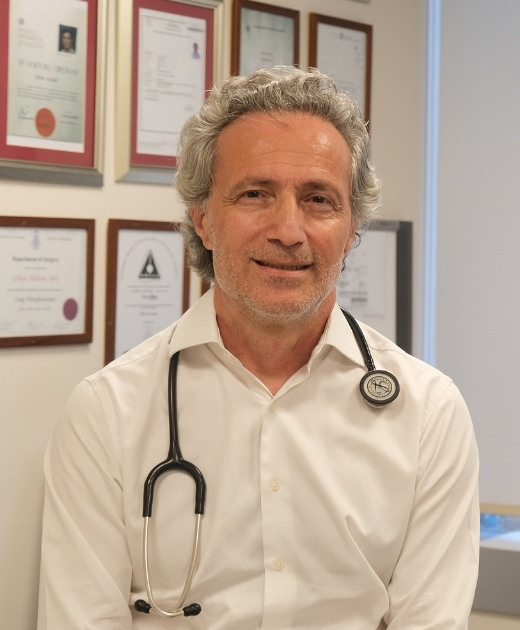
    Prof. Erkan Yıldırım, MD, PhD, FETCS

    Senior Thoracic & Lung Transplant Surgeon

    With over three decades of clinical excellence, Prof. Dr. Erkan Yıldırım is a European-board certified (FETCS) Thoracic Surgeon specializing in advanced minimally invasive techniques and complex pulmonary procedures. His career is marked by international training and a commitment to delivering life-changing surgical outcomes.

    Key Expertise & Specializations:

    Hyperhidrosis Specialist: A leading expert in the Closed Endoscopic Thoracic Sympathectomy (ETS) technique for the permanent treatment of excessive sweating (hands, armpits, face, feet sweating and facial blushing).

    Microsurgical intercostal nerve anastomosis for compensatory (reflex) sweating.
    Advanced MIS (Minimally Invasive Surgery): Expert in Uniportal VATS (Video-Assisted Thoracic Surgery) for lung cancer, oncological procedures, and emphysema.

    Pectus Deformity Correction: Specialized in minimally invasive repairs for Pectus Excavatum and Carinatum (Nuss & Abramson procedures).

    Lung Transplantation: Achieved a prestigious surgical fellowship at the Toronto Lung Transplant Program, one of the world’s leading centers, participating in over 89 transplant procedures.

    COPD Ballon intervention for COPD GOLD 3&4 Diseases

    Why Choose Prof. Dr. Erkan Yıldırım?

    International Excellence: European Board of Thoracic Surgery (EBTCS) certified and trained in world-class institutions in Canada and Switzerland.

    Innovation-Driven: A pioneer in Uniportal VATS and advanced thoracic oncological surgeries.

    Patient-Centered Care: Offering high-safety protocols and affordable, gold-standard treatment plans for international patients in Istanbul.

    • Caner T.
      Thoracic surgeon Dr. Erkan and his assistant were incredibly supportive. They made me feel completely safe before the procedure. Now my chest feels so much lighter and I have my life back. Thank you to everyone at the hospital!
      Caner T.
    • Selin K.
      After the bronchoscopic balloon treatment, my breathing improved so much that I could finally reduce my daily heavy inhaler doses. Dr. Erkan explained everything perfectly before the procedure. I am so grateful.
      Selin K.
    • Arthur M.
      I traveled from the UK for the COPD balloon treatment. The fact that it’s completely endoscopic with no incisions or stitches is amazing. I was discharged the very next morning. Huge thanks to Dr. Erkan and his team!
      Arthur M.
    • David B.
      For years, I struggled to walk due to COPD. After Dr. Erkan’s balloon procedure, I felt an immediate oxygen boost. Waking up and being able to take a deep breath was a miracle. Highly recommend him!
      David B.
    • Ahmet Y.
      My chronic cough and mucus build-up were ruining my life. Inhalers just weren't enough anymore. Dr. Erkan mechanically cleared my airways, and the relief is unbelievable. The hospital care was also top-notch.
      Ahmet Y.

    Frequently Asked Questions

    1What exactly is the COPD Balloon Treatment?
    It is an interventional bronchoscopic procedure designed to mechanically clean the lungs. We use a specialized medical balloon to dilate the narrowed bronchi and scrape away the thickened goblet cell layer (excessive mucus) that causes obstruction. It is not a lung volume reduction surgery (like coils or valves); it is a mechanical de-obstruction therapy.
    2Is this an open surgery? Will there be incisions?
    No. This is a 100% endoscopic procedure. We enter through the mouth using a bronchoscope to reach the lungs. There are no incisions, no cuts on the chest, and no stitches. This ensures a painless process and rapid recovery.
    3Is this treatment a permanent cure for COPD?
    COPD is a chronic condition, and no treatment can fully reverse the lung damage. However, Balloon Treatment significantly "resets" the obstruction. By mechanically opening the airways, it provides long-term relief from breathlessness. Maintaining a smoke-free life and following rehabilitation protocols extends the duration of the results for years.
    4Who is the ideal candidate for this procedure?
    The treatment is most effective for patients with Chronic Bronchitis phenotype COPD. These patients typically suffer from excessive phlegm, frequent coughing, and shortness of breath despite using inhalers. It is also suitable for patients who have difficulty walking or climbing stairs due to low oxygen levels. Balloon treatment is indicated for patients with GOLD stage 3 or 4 severe COPD who no longer derive benefit from medical therapy.
    5Does it work for Emphysema patients?
    Balloon treatment primarily targets airway obstruction and mucus. For patients with pure Emphysema (where lung tissue is destroyed), other treatments like Endobronchial Valves might be more appropriate. However, many patients have a "mixed" type. Prof. Dr. Erkan Yıldırım will determine the best option after examining your Tomography and PFT results.
    1Is there an age limit for the treatment?
    There is no strict upper age limit. We successfully treat patients in their 70s and 80s. The most important factor is your cardiac health and suitability for general anesthesia, not your calendar age.
    2Will I stop using my inhalers and medications?
    Many of our patients report such significant relief that they are able to reduce the dosage and frequency of their medications under doctor supervision. However, you should not stop any medication until advised. The goal is to improve your quality of life and oxygen saturation.
    3How long does the hospital stay take?
    Since the procedure is minimally invasive, the recovery is very fast. You will typically stay in the hospital for 1 night for observation and will be discharged the next morning.
    4Can I fly back home after the procedure?
    Yes. International patients generally stay in Istanbul for a total of 3-4 days. After the procedure and a final check-up (usually 2 days post-op), you are fit to fly back to your country.
    5What are the risks?
    As with any bronchoscopic procedure, there are minor risks, but they are rare. The most common side effect is a temporary sore throat or mild cough immediately after the procedure. Serious complications like bleeding are extremely rare due to the controlled nature of the balloon dilation.